
By Erica Lötter, certified baby sleep consultant · · 4 min read
If you scroll through social media at 2:00 AM while bouncing your baby back to sleep, you are guaranteed to see the promises: "Fix your baby’s sleep without sleep training and without a single tear!" As an exhausted parent, those words feel like a lifeline. Nobody wants to hear their baby cry. In fact, the fear of causing emotional harm or making a baby feel abandoned is the number one reason parents hesitate to ask for sleep help. But here is the contradiction: in the exact same breath, those "no-cry" ads will tell you to stop rocking your baby, take away the feeding-to-sleep habit, or put them down awake in their cot. After more than 20 years of working hands-on with babies and families as the founder of MomsLifeline, I can tell you one biological truth with absolute certainty: there is no process where change steps into a baby’s life and they don’t cry.
Why Babies Cry During Sleep Changes
To understand why tears happen, we have to look at how a baby’s brain works. A baby does not have the prefrontal cortex development to rationalize change. They cannot think, "Mommy is putting me in my cot awake because she wants me to get restorative, consolidated sleep so I feel better tomorrow." All your baby knows is what is familiar. If they have always been rocked, fed, or bounced to sleep, their brain expects that exact pattern. When you gently introduce a new boundary—even if you are standing right next to them—you are removing a familiar comfort. Crying is simply your baby’s primary tool for communicating protest. It is their only language to say, "This is different, I am frustrated, and I want my old routine back." Protest is a normal physiological reaction to learning a new skill, not a sign of trauma or abandonment.
What This Looks Like in Real Life
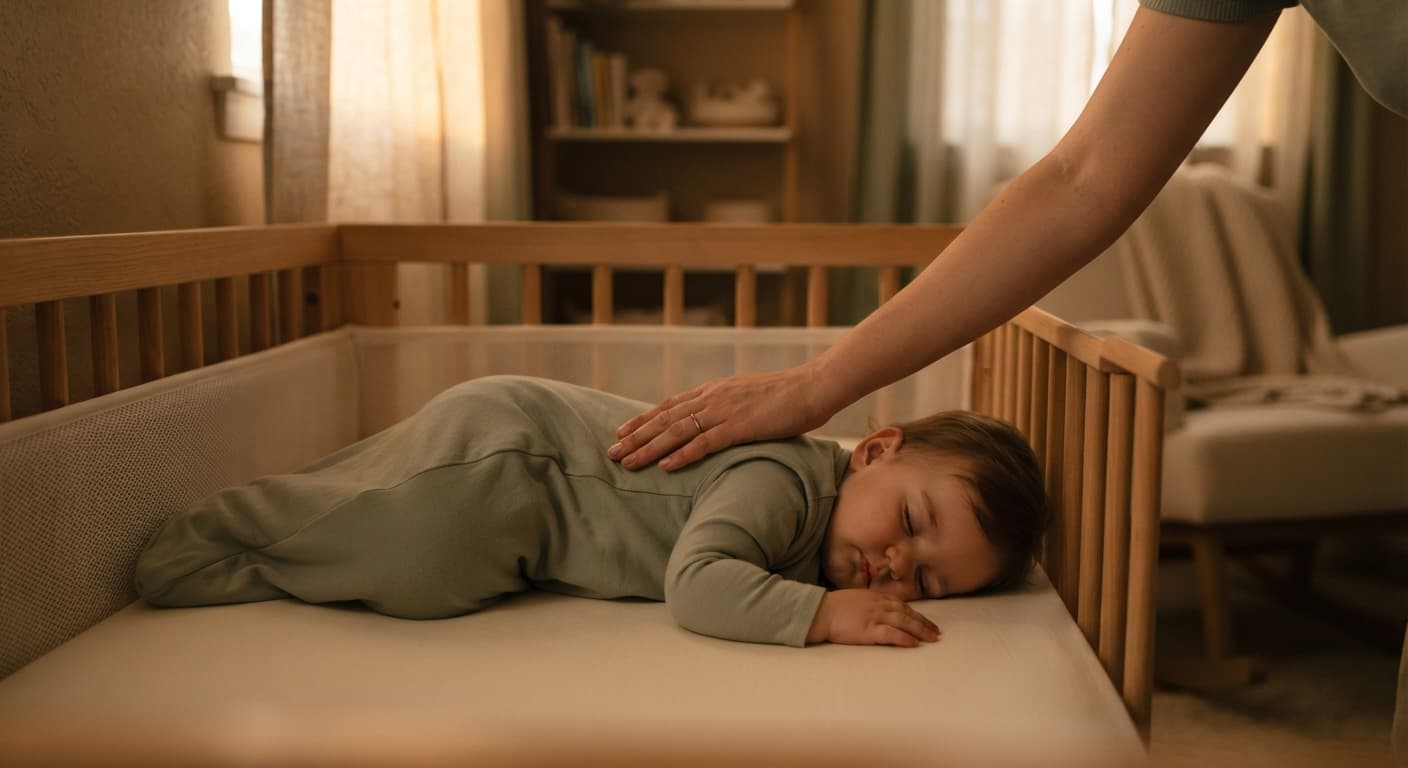
Not long ago, I worked with a mom who was terrified to start sleep training because her seven-month-old had only ever been bounced to sleep on a yoga ball. She had tried every "no-cry" trick on the internet, and every time she tried to lay him down awake, he cried—so she panicked, picked him up, and went right back to bouncing. When we worked together, we didn't leave him alone to feel abandoned. Instead, we changed how she responded. She placed him in his cot awake, gave him a soft comfort object, and used calm, predictable check-ins to reassure him while holding the new boundary. On the first night, he protested loudly for about 20 minutes. He wasn't in pain, and he wasn't traumatized—he was simply angry that the yoga ball was gone. Because his mom stayed steady and consistent, his brain quickly understood the new expectation. By night three, he rolled onto his side, found his hands to self-regulate, and fell asleep peacefully in under five minutes—waking up happy, rested, and deeply bonded to his mom.
The Danger of the "Zero-Tear" Promise
When social media markets sleep changes as completely tear-free, it sets parents up to feel like failures. When you try to put your baby down awake and they inevitably protest, you start to panic. You think, "Something must be wrong, because the internet said they wouldn't cry." That panic often leads parents to abandon the new boundary right away, which only confuses the baby further and reinforces the exact sleep associations you were trying to change.
It’s Not About the Crying—It’s What We Do When They Cry
Sleep training does not have to be a taboo word, and it certainly does not mean leaving your baby to feel alone in the dark. At MomsLifeline, we shift the focus away from trying to prevent every tear, and instead focus entirely on how we respond when they cry. When we offer calm, predictable reassurance, we send two very clear messages to our baby’s nervous system: 1. You are completely safe and loved. 2. You are capable of falling asleep on your own. Babies learn through repetition and consistency. When you remain steady and supportive while holding a loving boundary, your baby’s brain quickly adapts to the new expectation. The protest fades, self-regulation takes over, and your whole family finally gets the rest you need. We cannot change your past, but we can change your future. Ready to get your family’s sleep back on track? Every baby is unique, and there is no one-size-fits-all solution. If you are ready for personalized, scientifically grounded sleep guidance tailored to your child, fill out the MomsLifeline Online Questionnaire here and let’s start your journey to better rest.